
When buyers evaluate wool-feel bonded fabric, most of the attention goes to the face — the herringbone, melange twill or bouclé surface that shows on the finished garment. But the layer you never see often decides whether the coat sews cleanly, keeps its shape, and feels right in the fitting room. That hidden layer is the backing.
For winter-weight bonded fabric, the two backing types buyers meet most often are jersey backing and fleece backing. They are not interchangeable. A 480 GSM face fabric with jersey backing and the same 480 GSM face with fleece backing behave like different materials once they reach the cutting table. This guide explains what each backing is, how it changes the garment, and how to choose between them before you request samples or commit to bulk.
What “Backing” Means in Bonded Fabric
Bonded fabric is built from two layers laminated together: a face fabric (the decorative, outer surface) and a backing (the inner layer that gives the cloth body, stability and handfeel). The face carries the design; the backing carries much of the performance.
Because the two layers are bonded rather than woven as one cloth, the buyer can — within a given surface structure — choose a backing that tunes the fabric toward a tailored, lightweight character or a warm, substantial character. That choice is independent of the surface pattern, which is why the same herringbone can be offered with either backing.
In Huajay’s main wool-feel bonded fabric range (460–520 GSM winter-weight face fabrics), both jersey and fleece backing are available across most surface structures, including herringbone and melange twill. The difference between them is concentrated almost entirely in the inner layer.
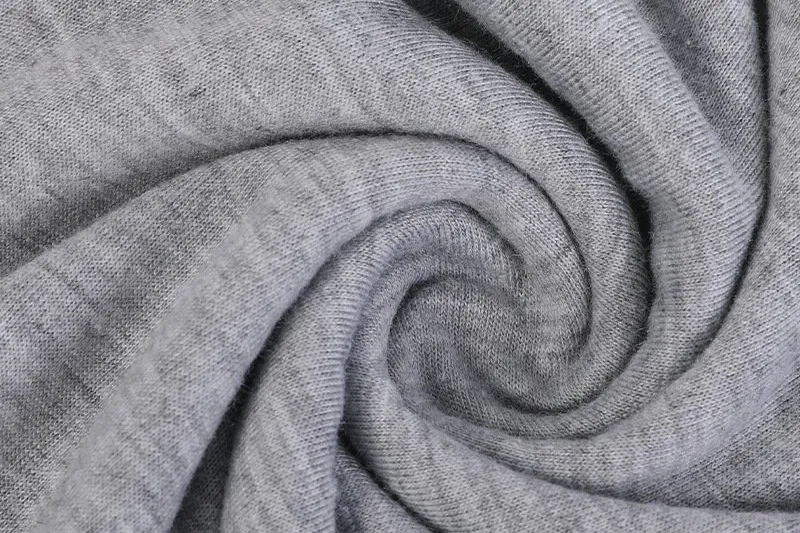
Jersey Backing: Smooth, Stable, Pliable
Jersey backing is a fine knit layer laminated to the back of the face fabric. In winter-weight bonded constructions it typically adds around 140 GSM to the total fabric weight.
Its defining characteristics are:
- Smooth inner surface — the knit reads as a clean, even cloth against the skin or against a garment lining.
- Low bulk — because it is thin, it adds little thickness at seams, collars, cuffs and pocket welts.
- Good dimensional stability — jersey backing helps the bonded cloth hold a pressed edge and resist over-stretching during cutting and sewing.
- Pliability — the fabric drapes fluidly and is comfortable for garments that move with the wearer.
Jersey backing is the default choice when the priority is a tailored line, a clean internal finish, and minimal added weight.
Fleece Backing: Warm, Soft, Substantial
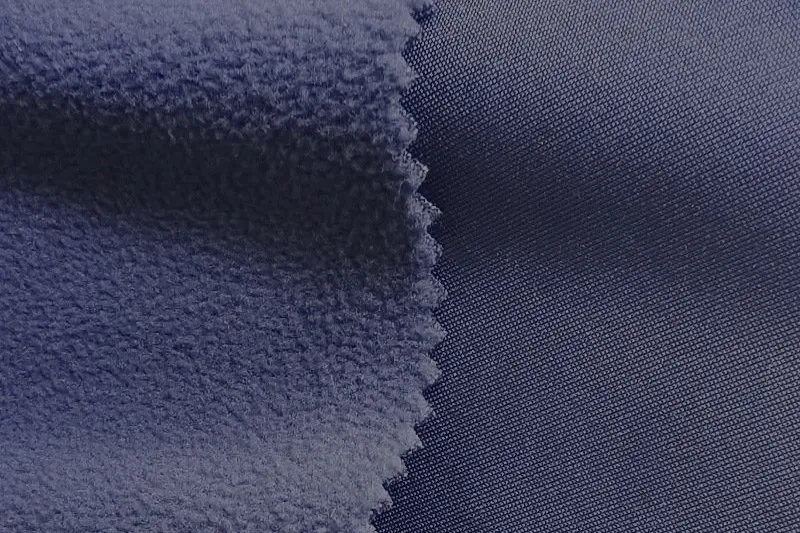
Fleece backing is a brushed inner layer laminated to the face fabric. In winter-weight bonded constructions it typically adds around 220 GSM — roughly 80 GSM more than jersey backing for the same face.
Its defining characteristics are:
- Brushed, soft handfeel — the inner surface is raised and warm to the touch, which reads as cosy on cold-weather garments.
- Added insulation — the loft of the fleece traps more air, increasing the fabric’s warmth without an extra lining layer.
- Greater thickness — the extra loft adds bulk at every seam intersection and at construction details.
- Softer drape with more body — fleece-backed cloth feels substantial and protective, suited to outerwear that should feel like a shield against cold.
Fleece backing is the choice when warmth and a soft internal feel matter more than minimal seam bulk.
Jersey vs Fleece Backing: Side-by-Side
| Dimension | Jersey Backing (~140 GSM) | Fleece Backing (~220 GSM) |
|---|---|---|
| Inner surface | Smooth knit | Brushed, raised |
| Added weight vs face | Lower | Higher (≈80 GSM more) |
| Warmth | Moderate; relies on face + lining | Higher; loft adds insulation |
| Seam & collar bulk | Low — sews cleanly | Higher — needs construction care |
| Drape | Fluid, tailored | Substantial, protective |
| Internal finish | Clean, even | Soft, padded feel |
| Best garment role | Blazers, soft jackets, trousers | Cold-climate coats, padded outerwear |
| Pressing / fusing | Easier, stable | Needs more care at heat details |
The table makes the trade-off obvious: fleece backing buys warmth and softness at the cost of thickness; jersey backing buys clean construction and a lighter hand at the cost of some insulation. Neither is “better” — they serve different garments.
How Backing Changes the Finished Garment
Two fabrics that share the same face, the same GSM and the same surface pattern can still produce completely different garments depending on the backing. The effects show up in five places.
Warmth and Insulation
Fleece backing’s loft traps air and raises the fabric’s effective insulation. For a winter coat destined for a cold market, that extra warmth can remove the need for a heavy interlining. Jersey backing leaves warmth to the face fabric and any separate lining, which is usually enough for transitional or layered garments.
Sewing and Production
This is where backing choice is most often underestimated. Fleece backing’s extra loft means more thickness at every seam — collar stands, lapel rolls, pocket welts, cuffs and buttonholes all accumulate bulk. A sampling room that handles jersey-backed cloth smoothly may need to adjust presser-foot pressure, stitch length and interfacing at those points for fleece-backed cloth. Jersey backing, being thin and stable, sews closer to a standard woven suiting and is friendlier to complex tailoring.
Drape and Handfeel
Jersey-backed bonded fabric drapes with a fluid, tailored line that suits blazers and trousers. Fleece-backed cloth drapes with more body and a padded, protective hand that suits overcoats and statement outerwear. The same herringbone surface will look sharper with jersey and cosier with fleece.
Internal Finish and Comfort
Against the skin or against a light lining, jersey reads as a smooth, even cloth; fleece reads as soft and warm. For unlined or partially lined garments where the inner surface is partly exposed, the choice directly affects wearer comfort and perceived quality.
Total Weight and Cost
Because fleece backing adds roughly 80 GSM more than jersey, it increases the total fabric weight and the material content per metre. Buyers budgeting garment weight or fabric cost should treat backing as a real variable, not a fixed constant. (Specific prices depend on face construction, order quantity and finish — discuss them with the supplier rather than assuming parity.)
Choosing Backing by Garment Type
Use the garment’s purpose as the starting point, then work backwards to the backing.
Tailored blazers and soft jackets → jersey backing. These garments need a clean internal finish, low seam bulk at the lapel and a fluid drape. Jersey keeps the construction manageable and the silhouette sharp.
Structured winter coats and overcoats → either, by climate. For a coat worn over layers in a mild winter, jersey backing keeps weight down and sewing clean. For a coat that must stand alone in a cold climate, fleece backing adds the insulation that removes the need for heavy interlining.
Trousers and tailored bottoms → jersey backing in most cases. Waistbands, pleats and pressed creases benefit from low bulk and stable pressing; fleece loft tends to fight a crisp trouser line.
Cold-climate statement outerwear and padded pieces → fleece backing. When the fabric itself should provide warmth and a substantial hand, the extra loft is an asset rather than a complication.
This logic mirrors the weight guidance in the companion guide to fabric weight (GSM) for winter outerwear: backing and face weight are two halves of the same decision, and both should be specified together.
Common Buyer Mistakes With Backing
A few recurring errors appear when buyers treat backing as an afterthought.
Assuming “bonded fabric” implies one backing. Bonded is a construction method, not a single specification. Always confirm the backing type, not just that the cloth is bonded.
Choosing fleece for every winter garment. Fleece adds warmth but also bulk. On a tailored blazer or a tailored trouser, that bulk works against the garment. Match backing to the garment, not to the season alone.
Evaluating only a loose swatch. Backing effects — seam bulk, collar behaviour, press stability — only show up in a finished sample. Request a made-up panel or, better, a prototype garment section rather than judging from a flat cutting.
Ignoring the sewing implications at bulk stage. A sampling room that loves the fleece-backed handfeel may still struggle at production scale if seam allowances and interfacing were set for jersey. Confirm construction feasibility during sampling, not after bulk is cut.
Treating backing as cost-neutral. Fleece backing uses more material per metre. Build it into fabric cost and garment weight planning from the start.
How to Specify Backing in a Sample Request
When you approach a supplier, name the backing explicitly rather than leaving it open. A strong sample inquiry for bonded fabric should state:
- Target garment (blazer, overcoat, trouser, padded jacket)
- Face weight range (for winter ranges, typically 460–520 GSM)
- Backing preference (jersey for clean tailoring, fleece for warmth)
- Surface structure (herringbone, melange twill, jacquard, bouclé)
- Market and testing needs (colour fastness, shrinkage, composition verification)
Naming the backing lets the supplier send swatches you can actually compare, instead of a random mix. The full process is covered in the guide to requesting fabric samples from a China supplier.
Quality Checks Before Bulk
Because backing affects seam behaviour and handfeel, the pre-bulk QC step should include backing-specific checks: bond integrity (no delamination after rubbing or heat), consistent backing GSM across the lot, and confirmed sewability on a production-representative sample. Huajay’s factory quality control process outlines the checks applied before bulk fabric is released. For a full pre-bulk inspection workflow, see the bonded fabric inspection checklist.
Conclusion
Jersey and fleece backing are the two inner layers that turn the same wool-feel face fabric into two different garments. Jersey backing gives you a smooth, stable, low-bulk cloth that sews like tailoring and drapes fluidly. Fleece backing gives you a warm, soft, substantial cloth built for cold-weather outerwear. The right choice follows the garment’s purpose — blazers and trousers lean jersey, cold-climate coats lean fleece — and both should be specified together with face weight and surface structure.
Huajay supplies wool-feel bonded fabrics in the 460–520 GSM winter range with both jersey and fleece backing across herringbone, melange twill, jacquard and bouclé surfaces. After choosing the backing, work out how much fabric your order actually needs with our fabric consumption calculation guide. To compare the two backings on your own target garment, review the wool-feel bonded fabric range or send your garment type, climate and backing preference through the sample request form.