
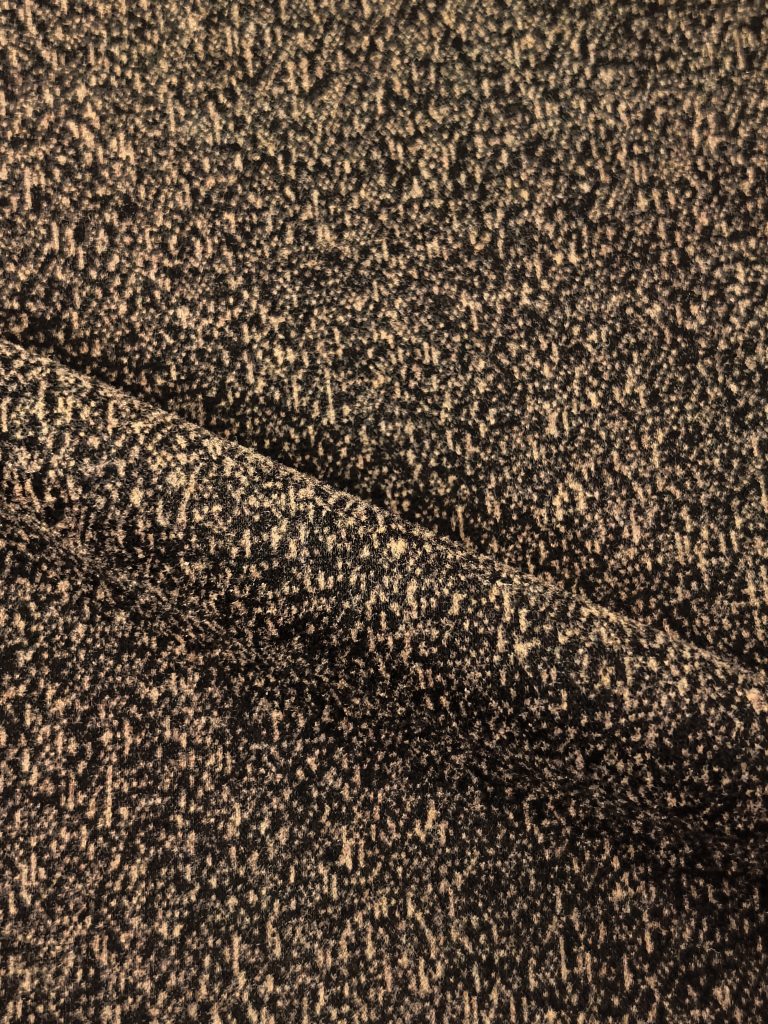
A fabric RFQ is not a price request — it is a technical and commercial specification that makes supplier quotes comparable. The goal is not the lowest number; it is getting every supplier to quote against the same composition, GSM, width, colour standard, quantity tier, testing regime and Incoterm, so the quotes can actually sit side by side.
Fabric is usually the largest single cost line in a garment, and every vague field in your inquiry becomes a different assumption at each mill. This guide gives you the five blocks a complete fabric RFQ should contain, what suppliers really do when information is missing, how to handle MOQ, price breaks, sample fees and Incoterms, and a fill-in template you can reuse.
Ask ten sourcing managers what a bad quote looks like and you will hear the same story: three suppliers, three numbers, three different fabrics. Supplier A quoted 180 GSM in 145 cm open width, Supplier B quoted 200 GSM in 150 cm tubular, Supplier C quoted a greige price and added dyeing “later.” The quotes are not comparable, the buyer picks the lowest number, and the real cost surfaces at lab dips, at MOQ negotiation, or after the container is booked.
The fix happens before the first email: a fabric RFQ specific enough that every supplier is forced to quote the same thing. Here is how to build one. If you want the parallel guide for the sample stage, see how to request fabric samples from a China supplier; this article covers the quote stage.
The Five Blocks of a Complete Fabric RFQ
Working fabric RFQs — the ones that come back comparable — consistently cover five blocks: fabric specification, quantity and pricing, colour and sampling, quality and testing, lead time and commercial terms.
Block 1 — Fabric specification
| Field | What to write | Why it moves the price |
|---|---|---|
| End use | “Women’s winter trouser”, “coat shell”, “blazer body” | Drives required performance (abrasion, drape, recovery) and therefore fibre, construction and finishing cost |
| Composition | e.g. 100% polyester face / viscose blend; recycled content if needed | Raw-material price, availability, and certification traceability if recycled fibre is claimed |
| Construction | Weave/knit type, face cloth structure, backing for bonded fabric | Knit vs woven, jacquard vs plain, jersey vs fleece backing — each has different machine speed and waste rates |
| Weight | GSM with tolerance, stated as finished weight: e.g. 460–520 GSM ±5% | Without a tolerance band, the cheapest compliant interpretation wins the quote |
| Width | Finished width, open or tubular | Width changes yield per garment and per-roll economics |
| Hand & look | Reference swatch, photo, competitor style number | “Soft” means different things to different mills — a physical reference removes the guess |
| Finishing | Brushing, peaching, DWR, anti-pill, calendering; for bonded fabric: adhesive/membrane type and bonding method | Each finishing step is a separate process cost and a separate lead-time line |
| Bonding spec (if laminated) | Backing type, bond method, required peel strength and test method | Bonded fabric is a construction, not a fabric — quote the lamination, not just the face |
For bonded constructions specifically, our what is wool-feel bonded fabric explainer and jersey vs fleece backing comparison give you the vocabulary to fill these rows precisely.
Block 2 — Quantity and pricing
State three numbers, not one: trial order quantity, reorder expectation, annual estimate. Suppliers price dye lots, capacity slots and long-term commitments differently, and a single “5,000 m?” without context gets a single, unhelpful number. Then ask for the quote as a price-break table (e.g. 500 / 1,000 / 3,000 / 5,000 m), with each tier stating what is included — dyeing, finishing, bonding, testing, packing.
MOQ deserves its own question set. Do not ask “what is your MOQ” — ask for:
- total order MOQ;
- MOQ per colour (dye-lot minimums, usually the binding constraint on custom colours);
- MOQ per construction or pattern;
- surcharge if you are below MOQ;
- whether reorders carry a lower MOQ than the first run.
Public sourcing guides quote widely varying numbers — anything from a few hundred metres of stock fabric to 2,000–3,000 m per custom colour — precisely because MOQ depends on the mill, the dye house and the construction. Treat every MOQ figure as supplier-specific and confirm per style, not as an industry constant.
Block 3 — Colour and sampling
Name the colour standard (Pantone TCX for textiles), the allowed tolerance, and who pays for how many lab-dip rounds. List the sample types you need and in what order:
- Swatch card / hanger — is it free, who pays courier;
- Cut-length or yardage sample — priced per metre or a development fee;
- Lab dips — fee per colour, rounds included, lead time (custom colours typically run several days per round);
- Strike-offs (prints) and bonded development samples — these carry real development cost and should be quoted separately from bulk price.
Ask explicitly whether sample fees are deductible against a bulk order. Some suppliers do, some don’t, and some do it only above a threshold — it is a policy question, not a standard.
Block 4 — Quality, testing and compliance
This is the block most RFQs skip entirely, then fight about later. Specify the test, the method and the limit for each property that matters to your garment: shrinkage, colourfastness to washing/rubbing/light, pilling resistance, and for bonded fabric, peel strength and wash retention (our delamination testing guide covers which methods apply and why “no universal pass/fail value” is the honest answer).
If your market or brand requires certifications — OEKO-TEX Standard 100, GRS or similar — state whether you need a valid certificate for the actual lot (a transaction certificate) or a supplier’s general programme claim. And say whether testing is in-house or third-party lab, because the lab fee is real money and belongs in the quote. We publish how we handle buyer-nominated testing on our fabric testing support page; put your regime in the RFQ and the quotation will reflect it honestly.
Finally, state the acceptance framework for bulk: AQL level, 4-point grading or your own inspection protocol — the same ground rules as our bonded fabric inspection checklist.
Block 5 — Lead time and commercial terms
Ask for sample lead time and bulk lead time as separate lines, both anchored to an approval event (“X days after lab-dip approval”), not to the inquiry date. Then the commercial layer: payment terms, quotation validity (fabric pricing moves with yarn, energy and tariffs — ask how long the number stands), packing and roll length, and the Incoterm with a named place.
What Suppliers Actually Do When Your RFQ Is Vague
A missing field does not get left blank — it gets filled with an assumption, and every mill assumes differently. The practical behaviour on the supplier side:
- Quote on assumptions. Weight, width, finishing and colour get guessed to the cheapest compliant reading. Three vague RFQs produce three incomparable prices.
- Send questions back. Expect a round-trip of clarifications on composition, quantity, destination port — days or weeks lost, worse across time zones.
- Deprioritise the inquiry. Structured briefs get answered fast; “looking for soft bonded fabric, price?” competes with everything else in the inbox and often loses.
- Give a reference price, not a firm one. A USD/m range with unstated inclusions — dyeing? testing? packing? freight? — that moves the moment you order.
- Pitch stock instead. No spec means the supplier offers what is in the warehouse. Sometimes useful; it is still not what you asked for unless you verify performance against your end use.
None of this is malice. It is arithmetic: a supplier cannot price what has not been specified, so they price something adjacent and hope.
The Eight Mistakes That Kill Fabric Inquiries
- Sending a photo or Pinterest link with no written specification.
- Writing “soft quality polyester” — adjectives are not specs; composition, GSM and width are.
- Quoting one number instead of trial / reorder / annual volumes, so no real price ladder exists.
- Asking unit price only, without stating what the price must include (dyeing, bonding, testing, packing, freight).
- Confirming colour verbally on chat with no colour standard or tolerance recorded.
- Treating sample time and bulk time as one “lead time.”
- Comparing FOB unit prices while ignoring landed cost, MOQ, sample fees and defect risk.
- Leaving test standards and acceptance limits out of the inquiry, then inventing them during a claim.
If you want the one-line version: every field you leave blank, the supplier fills with their cheapest interpretation.
Incoterms: Quote the Same Journey, Not Different Ones
Two quotes at the same number can describe different obligations. Under Incoterms 2020 (ICC): EXW — seller makes goods available at their premises; buyer handles export, freight, insurance and import clearance. FOB — seller clears export and loads on the buyer’s nominated vessel; risk transfers at loading. CIF — seller additionally pays freight and insurance to the destination port, but import clearance and duties remain the buyer’s. DDP — seller carries everything to the named destination, duties included.
So an “FOB Ningbo $5.20” and a “DDP Hamburg $5.20” are not the same price — the second quietly contains freight, insurance, customs and duties. The cleanest RFQ clause asks for all of them side by side:
Please quote EXW Shaoxing, FOB Ningbo, CIF [your port] and DDP [your warehouse] separately, stating for each whether the price includes export packing, inland freight, export clearance, ocean freight, insurance, destination clearance, duties and VAT.
Comparing like with like at the landed-cost level is how you avoid the cheapest quote turning into the most expensive container.
A Fill-In Fabric RFQ Template
Copy this into your next inquiry and delete what does not apply:
RFQ No.: ______   Project: ______   Quote deadline: ______
Currency: ______   Incoterms to quote: EXW / FOB / CIF / DDP (named places: ______)

1. FABRIC SPECIFICATION
   End use: ______
   Composition: ______   Construction: ______
   Finished weight: ___ GSM ± ___%   Finished width: ___ cm (open/tubular)
   Hand/look reference: swatch attached / photo / style no. ______
   Finishing: ______
   (Bonded fabric) backing type: ______   bonding method: ______
   (Bonded fabric) peel strength requirement: ______ (method: ______)

2. QUANTITY & PRICING
   Trial order: ___ m   Reorder expectation: ___   Annual estimate: ___ m
   Price breaks at: 500 / 1,000 / 3,000 / 5,000 m (state inclusions per tier)
   MOQ: total order ___ / per colour ___ / below-MOQ surcharge ___ / reorder MOQ ___

3. COLOUR & SAMPLING
   Colour standard: Pantone ___ TCX   Tolerance: ______
   Samples needed: swatch card / cut lengths / lab dips (___ rounds) / bonded dev sample
   Sample fees, courier responsibility, and deductibility against bulk: ______

4. QUALITY, TESTING & COMPLIANCE
   Shrinkage: method ___ max ___%   Colourfastness: method ___ grade ___+
   Pilling: ___ cycles grade ___+   Peel strength (bonded): method ___ min ___
   Certification required: ______ (lot-level certificate required? yes/no)
   Testing lab: in-house / third-party (named: ______) — who pays?
   Bulk acceptance: AQL ___ / grading system ______

5. LEAD TIME & COMMERCIAL
   Sample lead time: ___ days after ______ approval
   Bulk lead time: ___ days after deposit / lab-dip approval
   Payment terms: ______   Quotation validity: ___ days
   Packing: ___ m/roll, ______   List all costs included and excluded.
FAQ
What is the difference between an RFQ and a request for samples? A sample request starts a physical evaluation; an RFQ starts a priced, spec-locked path to production. In practice run them together — samples without a quote behind them cannot become an order. Our sample request page asks for the same fields so both move at once.
How many suppliers should I send a fabric RFQ to? Three to five is the common working range: enough spread to validate the market price, few enough that each gets real responses and accurate specs. More than that and you are managing a mailing list, not sourcing.
Should I state a target price in the RFQ? Optional, and a trade-off. A target price speeds convergence but anchors suppliers to your number instead of their honest cost. If you use one, still require the full price-break table so you can see where their real economics start.
Why do two suppliers quote very different prices for the “same” fabric? Almost always an unstated field: GSM interpretation, width basis, finishing steps, dye-lot colour depth, testing inclusions, or a different Incoterm. Diff the quotes field by field before believing the gap is real. Before shortlisting anyone, run them through the 10 questions for bonded fabric suppliers — comparable quotes only come from comparable capability.
Can I send one RFQ to stock and custom mills? You can, but expect different answers to the MOQ and sampling blocks. Stock mills price availability; custom mills price development. State which you are open to and ask each supplier to answer as both if relevant.
Next step: send your fabric requirements — end use, composition, target GSM and width, colour standard, quantities at each tier, and your testing regime — through our sample request form or the contact page, and you will get a price-break quotation with inclusions and lead times stated per tier, not a single floating number.